
Birds Nesting in Your Attic? What Homeowners Need to Know
This guide breaks down how to tell if birds are in your attic, what species are most common in Richmond, how they’re getting in, and what risks come with leaving them there. It also covers what can and can’t be done when it comes to removal, and how to solve the problem without it turning into a repeat issue.
How to Tell If Birds Are Nesting in Your Attic
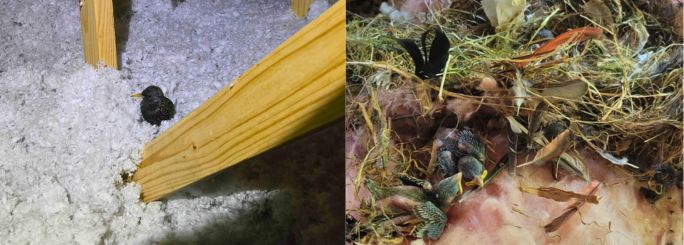
Birds in an attic usually make themselves known pretty quickly. Here are the most common signs to look out for:
-Birds flying to and from the same spot on your roof
If you keep seeing birds land near a vent or roofline opening, that’s usually your entry point.
-Nesting material outside the home
Twigs, grass, or debris around vents, soffits, or on the ground below can indicate active nesting.
-Droppings on siding or near entry points
Buildup around vents or roof edges is a clear sign birds are spending time there.
-Scratching or movement above the ceiling
It can sound similar to rodents at first, but birds tend to be more active during daylight hours.
-Chirping or fluttering sounds
You’ll usually hear this early in the morning or in the evening. Nesting birds are active and vocal, especially if there are babies.
If you’ve noticed these signs there’s a strong chance you have birds nesting in your attic.
What Time Of Year Do Birds Nest In Attics?
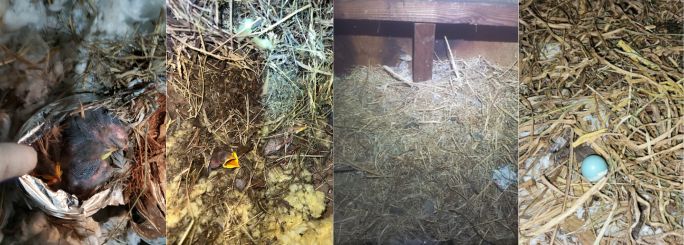
Most birds in Virginia nest in the spring and early summer. This usually starts around March and can run through July, depending on the species and weather. That’s when birds are actively looking for safe places to lay eggs and raise their young. Attics check all the boxes. They’re warm, protected from predators, and out of the elements.
In the early season, you’ll hear more movement and adult birds going in and out. Then a few weeks later you might start hearing more noises when eggs hatch. By mid-season constant chirping is common as the babies grow.
Some species, like starlings and sparrows, can raise multiple broods in a single season. That means even if one group leaves, another can move in shortly after if the opening is still there.
Bird activity usually drops off outside of nesting season.
How Are Birds Getting Into My Attic?
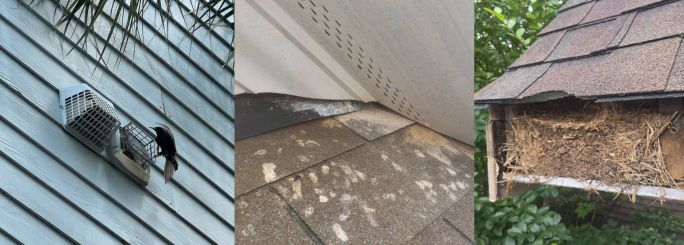
Most of the time, it’s not a big obvious hole. It’s something small that’s worn out or wasn’t built to keep animals out in the first place.
The first place to check is the roof vents. That’s the most common entry point. The covers get brittle, crack, or loosen over time. Once there’s any give there, birds will push right in.
After that, look at the soffits, the underside of the roof overhang. If those panels are soft, warped, or starting to separate, birds will find that spot and work it open.
Gable vents are another common issue. If there’s no proper screen behind them, or the screen is damaged, birds can go straight through.
There are also small gaps along the roofline where everything comes together. Around the fascia, where the roof meets the siding. It doesn’t take much of an opening for smaller birds to get in.
And then vents in general. Bathroom vents, dryer vents. Anything that already leads into the home and gives off a little warmth is going to attract them.
From the ground, most of this looks fine. But once a bird finds a weak spot, it will keep using it and usually make it worse over time.
What Kind Of Bird Is Nesting In My Attic?
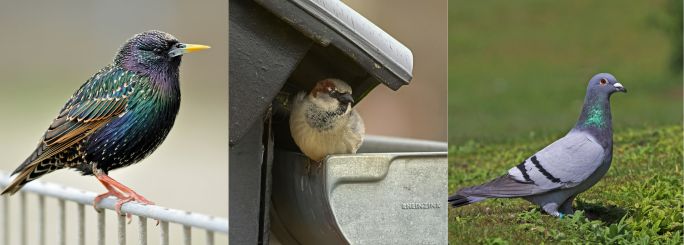
If the noise is constant chirping, especially in the morning, and it sounds busy up there it’s usually starlings or sparrows. Those are the two most common attic birds in Richmond. They’re aggressive nesters and will pack a vent or soffit pretty quickly.
If the noise is heavier, more thumping or flapping, and you’re seeing larger birds around the roofline, that’s more likely pigeons. They tend to stick to roof edges and bigger openings.
If you’re hearing pecking or tapping on the outside of the house, especially on siding or near the roofline, that points more toward woodpeckers. They’re not always nesting inside the attic, but they will create openings that other birds end up using.
Grackles are a little less common inside attics, but you’ll notice them by how loud and active they are around the roof. They’re bigger birds, so the movement is more noticeable.
The main thing is that the species of bird matters because it determines what can be done. Some birds can be removed right away, others can’t be touched once they’ve started nesting due to wildlife regulations.
Health Risks Of Birds Nesting In Your Attic
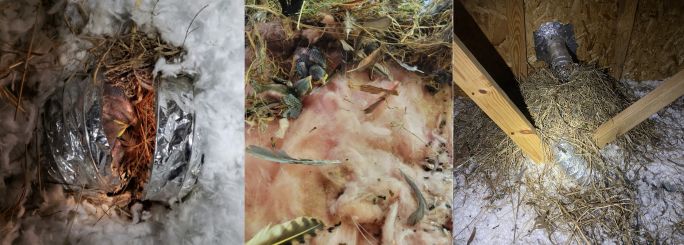
Once birds are living in an attic, there are real health concerns that start to build up.
The biggest issue is droppings. Over time, they accumulate in the insulation and on surfaces below the nesting area. That buildup can carry bacteria and fungal spores, especially in enclosed attic spaces where there’s not much airflow.
There’s also parasites. Bird nests often bring mites, fleas, and other insects with them. Once the birds leave, those parasites don’t just disappear. They can move further into the home looking for a new host.
Another problem is air quality. Attics are connected to the rest of the house more than most people realize. Contaminated insulation and droppings can affect the air being circulated into living spaces.
And then there’s moisture and mold. Nesting material blocks airflow and traps moisture, especially around vents. That creates the kind of environment mold needs to grow.
Most of this doesn’t happen overnight, but once birds are established, it builds up quickly. The longer they’re in there, the more cleanup is involved afterward.
Why You Shouldn’t DIY Bird Removal
A lot of homeowners try to handle this themselves once they realize what’s going on. The problem is, it’s usually not as straightforward as it looks.
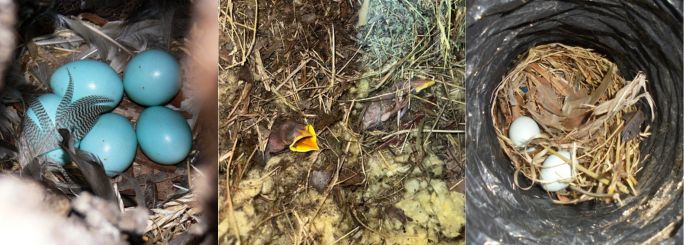
The biggest issue is nesting birds and babies. If there are eggs or hatchlings in the attic, removing the adults or blocking the entry point can trap them inside. That turns into a bigger problem fast.
There’s also the legal side. Most bird species are protected once they’re actively nesting. That means you can’t legally remove them until the nest is no longer active. It’s not something most homeowners are aware of until they’re already in the middle of it.
Even if it’s a species that can be removed, the nest is usually deeper than expected. It’s not just sitting at the opening. Birds pack material inside vents, soffits, and insulation. Pulling out what’s visible doesn’t fix the problem.
And then there’s the entry point. Even if the birds are removed, if that opening isn’t properly sealed, they’ll come right back or another bird will take the same spot.
Most DIY attempts end up being temporary. The birds leave for a short time, then the problem comes back because the root issue was never addressed.
Which Birds Can Be Removed and Which Are Protected in Virginia
In Virginia, most native bird species are protected under federal law once they’re actively nesting. That means if there are eggs or babies in the nest, you can’t remove them, even if they’re inside your attic.
There are a few exceptions. The birds we deal with most often in attics that can be removed are Starlings, House sparrows, and Pigeons.
These are non-native species, and they’re not protected the same way. That means removal can usually be done even during nesting.
Everything else is generally considered protected, including birds like robins, wrens, and most native songbirds. If they’re nesting, the typical approach is to wait until the babies have left the nest before sealing things up.
This is why identifying the bird matters. It changes what can be done and when it can be done.
If the wrong approach is taken, it can lead to legal issues or a situation where birds get trapped inside, which creates a bigger problem in the attic.
How to Get Birds Out of Your Attic
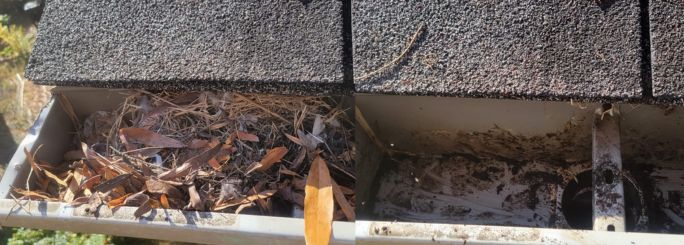
The way birds are removed depends on two things. What species it is and whether there’s an active nest.
If it’s a species like starlings, sparrows, or pigeons, removal can usually be done right away. If it’s a protected species and there are eggs or babies, the approach changes. In those cases, the birds typically have to be left alone until the young have left the nest.
This is where it usually makes sense to bring in a licensed and insured wildlife removal company. Between protected species laws, nesting timelines, and how these animals behave, it’s easy to make the situation worse without realizing it.
There’s also more going on than just what’s visible. Nests are packed into vents, soffits, or insulation, and the entry point that allowed them in is still there. If that opening isn’t properly sealed, the same problem comes right back.
The goal isn’t just to get the birds out. It’s to handle it the right way, clear the nesting material, and fix the entry point so it doesn’t happen again.
How Professional Bird Removal Works
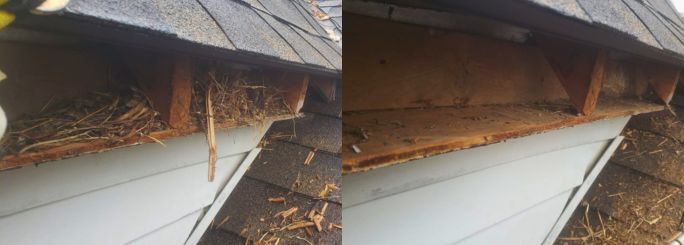
It usually starts with figuring out exactly what’s going on. That means identifying the species, finding the entry point, and checking whether there’s an active nest.
From there, the approach depends on what kind of bird it is and what stage the nesting is in. If it’s a non-protected species, removal can be done right away. If it’s protected and actively nesting, the job may involve monitoring the situation and timing the removal so it’s done legally and without trapping anything inside.
Once the birds are out, the next step is removing all nesting material. That’s not just what’s visible at the opening. Nests are usually packed deeper into vents, soffits, or insulation, so everything has to be cleared out.
After that, the entry point gets sealed properly. That might mean repairing a vent, reinforcing a soffit, or installing a guard. The goal is to close it off in a way that holds up, not something that birds can push through again.
The last piece is making sure nothing else is going on. If there’s contamination, damage, or multiple entry points, those need to be addressed so the problem doesn’t come back.
Done correctly, it’s a full process. Not just getting birds out, but fixing what allowed them in to begin with.
Humane Bird Removal and Prevention in Richmond, VA | Critter Authority
At Critter Authority, the focus is on handling the situation based on what’s actually there. That starts with identifying the species and whether the nest is active. If removal can be done right away, it’s handled safely. If the birds are protected and nesting, the approach is adjusted so nothing is harmed and everything stays within regulations.
Once the birds are out, the work isn’t done. The nesting material is removed, and the entry point is properly sealed so it can’t be used again. That might mean reinforcing a vent, repairing a soffit, or installing a guard depending on where the issue started.
The goal is to solve the problem in a way that holds up. Not just getting birds out today, but making sure they don’t come back next season.
Call Critter Authority today at (804) 492-2804 or complete our contact form for a free bird removal estimate in Richmond today.