
How Rodent Control Helps Prevent Hantavirus
With hantavirus getting more attention in the news recently, a lot of homeowners are starting to think differently about rodent problems inside the home. Mice and rats are more than just a nuisance. Over time, the droppings, urine, and nesting material they leave behind can create sanitation and health concerns in attics, crawlspaces, garages, and other enclosed spaces.
This blog explains what hantavirus is, how rodents contaminate homes, and how professional rodent control and exclusion help reduce long-term exposure risks by stopping rodent activity at the source.
What Is Hantavirus?
Hantavirus is a disease linked to rodents and rodent contamination. People are typically exposed through contact with particles from rodent droppings, urine, or nesting material that become airborne.
For example, if droppings or nesting material are disturbed while sweeping, vacuuming, or cleaning, small contaminated particles can get pushed into the air.
Most exposure concerns happen in enclosed spaces where rodents have been active for a while, especially attics, crawlspaces, garages, sheds, basements, or storage areas that don’t get checked often.
The important thing for homeowners to understand is that hantavirus is still considered rare, but rodent activity inside a home should always be taken seriously from a sanitation standpoint. The longer rodents stay active in a structure, the more contamination builds up over time.
How Rodents Spread Contamination Inside Homes
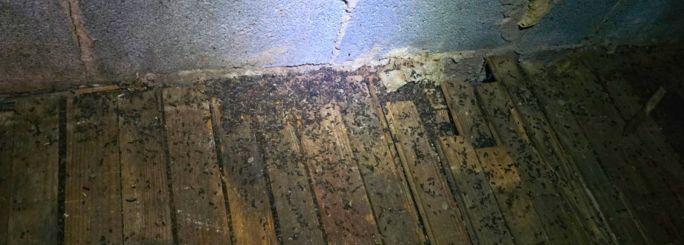
Most rodent contamination happens in parts of the home people rarely see every day. Attics, crawlspaces, garages, basements, and storage areas are some of the most common places rodents settle in.
Once they’re inside, they leave droppings, urine, saliva, and nesting material throughout the areas they travel. In attics especially, rodents will tunnel through insulation, build nests, and contaminate stored items over time.
The longer the activity continues, the more contamination builds up. As droppings and nesting material dry out, small particles can become airborne if the area is disturbed during cleaning, renovations, or even normal airflow moving through the space.
That’s why rodent problems are about more than just noise or damage. Even a small infestation can affect the cleanliness of your home.
Signs You May Have Rodents in Your Home
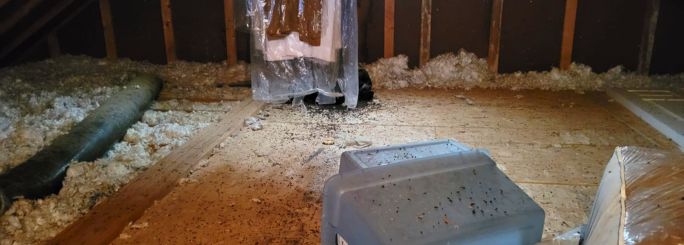
Most rodent problems start quietly. In many cases, homeowners hear or smell signs of activity before they ever see a mouse or rat.
Some of the most common signs include:
- Scratching or movement inside walls or ceilings, especially at night
- Droppings in attics, garages, basements, crawlspaces, or cabinets
- Gnaw marks on wood, wiring, food packaging, or insulation
- Strong musky odors near nesting areas
- Shredded insulation, paper, or fabric being used as nesting material
- Rodent activity around foundations, garage doors, crawlspace vents, or utility lines
Mice and rats are good at staying hidden, especially during the day. By the time signs become noticeable, there’s usually already an established problem somewhere in the home.
How Professional Rodent Control Helps Reduce Disease Risks
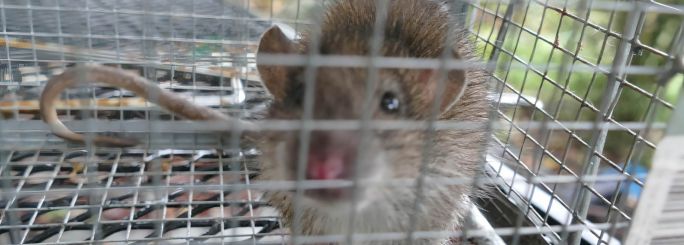
The longer rodents stay active in a home, the more contamination builds up behind the scenes.
That’s why our professional rodent control is focused on more than just trapping mice or rats that are already inside. The goal is to stop the activity, identify where rodents are nesting, and keep the problem from continuing.
That usually starts with a full inspection of the attic, crawlspace, garage, basement, and exterior entry points. Rodents tend to travel the same routes repeatedly, so identifying those access points is a big part of controlling the problem long-term.
Once active rodents are removed, attention shifts to the conditions they leave behind. Nesting areas, droppings, contaminated insulation, and heavily used travel paths can all continue creating sanitation concerns if they’re ignored.
Exclusion work is also important. If entry points stay open, new rodents eventually move back in and the contamination cycle starts over again.
The goal of professional rodent control is to reduce ongoing exposure by removing the source of the problem and preventing future activity before contamination continues spreading through the home.
Why Rodent Exclusion Matters
Mice and rats usually enter homes through small gaps around foundations, utility lines, crawlspace vents, rooflines, garage doors, and other openings most homeowners never notice. If those access points stay open, rodent activity eventually starts back up again.
That’s why exclusion is such an important part of long-term rodent control.
We can help identify where rodents are getting in and properly seal those areas so the home is no longer easy to access. Otherwise, trapping becomes a temporary cycle where rodents are removed, replaced, and continue contaminating the same spaces over and over.
Stopping that cycle is what helps reduce long-term contamination inside attics, crawlspaces, garages, and wall voids.
Rodent Control and Exclusion in Richmond, VA
Critter Authority provides rodent control and exclusion services for homeowners throughout Richmond and the surrounding areas.
If you’re hearing scratching in the walls, finding droppings, or noticing signs of rodent activity around your home, contact Critter Authority to schedule a rodent inspection in Richmond, VA.